
Difference Between Investing and Trading for Beginners in 2026 — yes, this is a question almost every new person in India asks before starting in the stock market. Many beginners mix up these two words and lose money because they choose the wrong one. In this easy guide, you will learn the clear difference between investing and trading for beginners in 2026. We explain everything in simple words like a school book, with Indian examples, so even a student or first-time saver can understand.
Why You Must Know This Difference in 2026
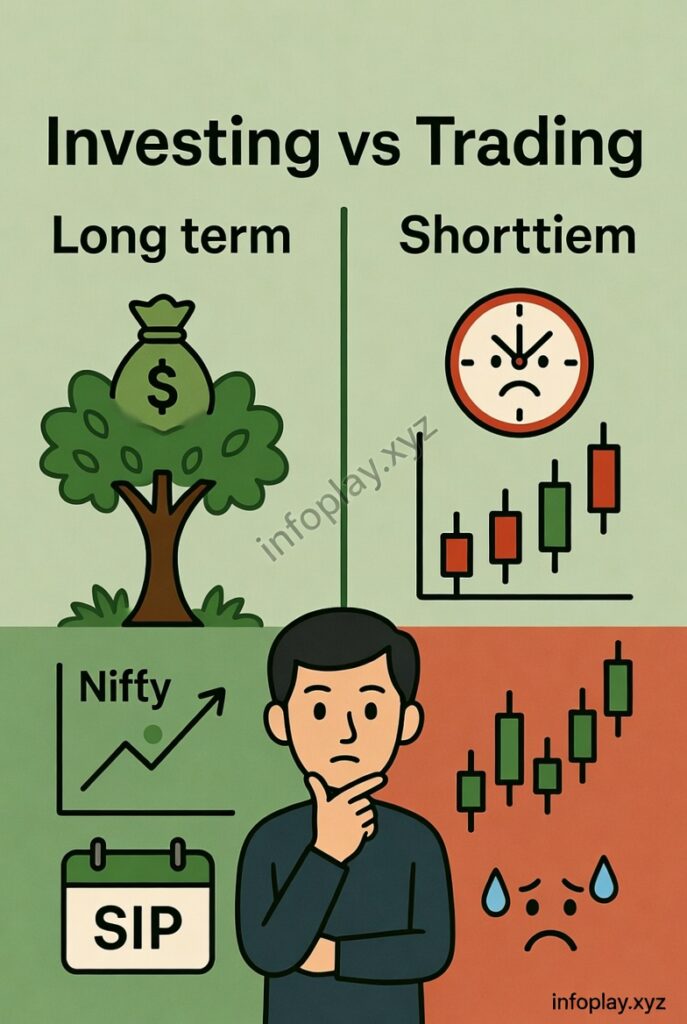
In India today, the stock market is growing fast. Nifty 50 and Sensex are hitting new highs. But if you don’t know the difference between investing and trading, you can lose your hard-earned money quickly. Investing is slow and safe for long term. Trading is fast and risky. Let’s understand both clearly.
What is Investing? (Simple Explanation)
Investing means buying stocks or ETFs and holding them for many years (5, 10 or even 20+ years). You want the company to grow and give you good returns over time.
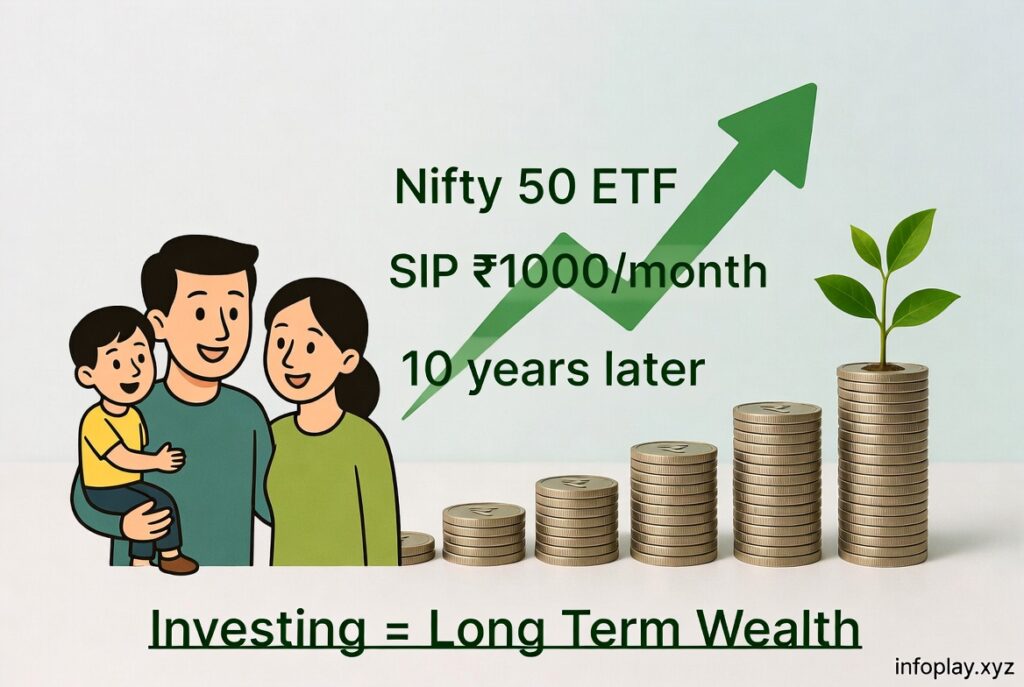
Example for Indians: You buy Nifty 50 ETF or shares of Reliance Industries and keep them for 10 years. You also do monthly SIP of ₹1,000. This is investing.
What is Trading? (Simple Explanation)
Trading means buying and selling stocks in a short time — same day (intraday), few days or few weeks. You try to make quick profit from price ups and downs.
Example for Indians: You buy HDFC Bank shares in the morning and sell in the evening when price goes up by 2%. This is trading.
Clear Difference Between Investing and Trading (Easy Table)
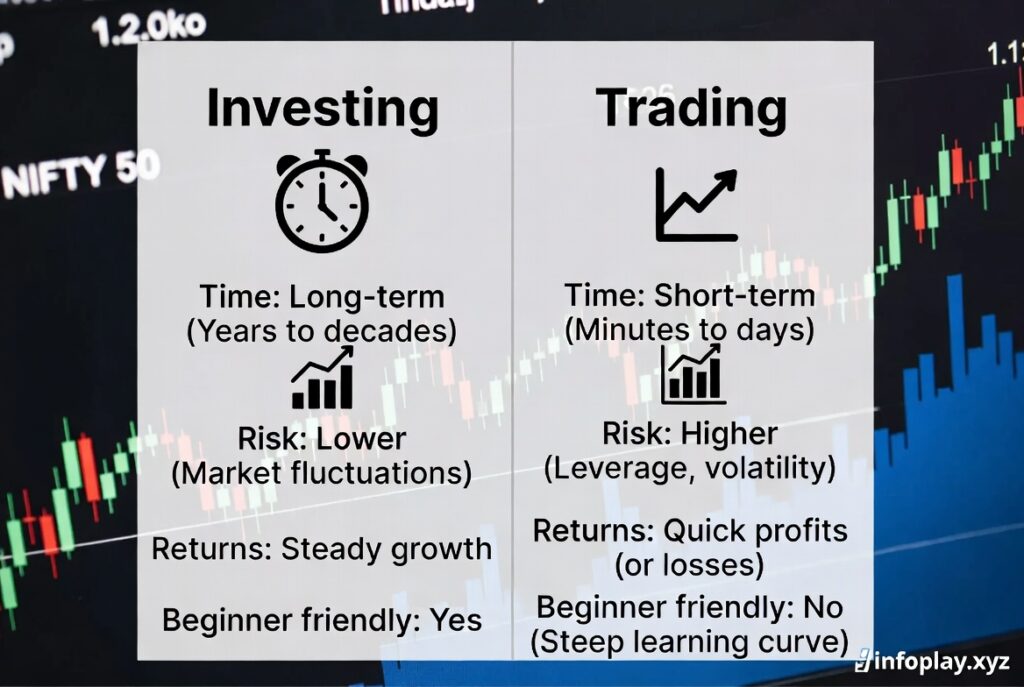
| Point | Investing | Trading |
|---|---|---|
| Time Period | Long term (5–20+ years) | Short term (minutes to few weeks) |
| Goal | Build wealth slowly | Make quick profit |
| Risk Level | Low to Medium | Very High |
| How often you check | Once a month or quarter | Many times a day |
| Best for | Beginners, students, salaried people | Experienced people only |
| Tools used | SIP, Mutual Funds, ETFs | Intraday, Options, F&O |
| Taxes in India 2026 | Lower (LTCG 12.5% after 1 year) | Higher (STCG as per your tax slab) |
| Example | SIP in Nifty 50 ETF | Intraday trade on Tata Motors |
Investing in Simple Words – Good for Beginners in India
- You become owner of good companies for long time.
- You get benefit of compounding (money grows on money).
- Less stress — no need to watch market daily.
- In India you can start with ₹500 SIP on Groww or Zerodha.
Popular Investing Options in 2026:
- Nifty 50 ETF
- Sensex ETF
- Blue chip stocks like Reliance, HDFC Bank, TCS
Trading in Simple Words – Not Good for Most Beginners
- You try to guess price movement in short time.
- Needs daily time, charts, news and experience.
- Most new traders lose money (studies show 80-90% lose).
- In India you need separate F&O account and pay high taxes on short-term gains.
Which One Should Beginners Choose in India in 2026?
For 99% of beginners in India, Investing is the best choice. Why?
- You have a job or studies — no time for daily trading.
- Your small money grows safely with SIP.
- Less chance of big losses.
Start with investing. Learn trading only after 2–3 years of experience.
Real Indian Example (₹1,000 per month)
If you Invest (SIP in Nifty 50): ₹1,000 every month for 10 years at average 12% return → around ₹2.3 lakh For 20 years → around ₹7–9 lakh
If you Trade: Many beginners lose 30–50% of money in first year because of wrong decisions.

Step-by-Step: How to Start Investing (for Beginners)
- Open free demat account on Groww or Zerodha (takes 10 minutes with Aadhaar + PAN).
- Complete KYC.
- Add ₹500 or ₹1,000 from your bank.
- Buy Nifty 50 ETF or start SIP.
- Keep adding money every month and forget for years.
Common Mistakes Beginners Make
- Thinking trading is easy way to get rich fast.
- Buying tips from WhatsApp or YouTube.
- Checking portfolio every day and selling in panic.
- Mixing investing money with trading money.
FAQ: Difference Between Investing and Trading for Beginners in 2026 (India)
Can I do both investing and trading? Yes, but start only with investing first.
Which app is best for beginners in India? Groww is easiest. Zerodha is good if you want to learn more.
Is trading safe for students? No. Most students lose money in trading. Stick to investing.
How much money do I need to start investing? Only ₹100–₹500 per month through SIP.
Will I pay tax on investing? Yes, but only 12.5% on profit after 1 year (above ₹1.25 lakh).
Difference Between Investing and Trading for Beginners in 2026 — now you know it clearly!
Start your journey today with investing. Open your account on Groww or Zerodha and begin a small SIP in Nifty 50. Small steps today will make you rich tomorrow.
Bookmark this page and share with your friends and family.
Last updated: April 2026. This is for education only. Consult a SEBI registered advisor before investing. Past returns are not guarantee of future returns.